
The following blog post was written by Jeff Schwartz for Royal LePage – original blog here
September 28, 2026
Falling in love with a home is easy. The light, the layout, the backyard; it’s the emotional things that sell you on a property. The heating and cooling system? Almost nobody tours a house thinking about the furnace. Yet it’s an expensive mechanical system to replace, and a common source of unwelcome and costly surprises in the first year of ownership.
The good news: most of the warning signs are visible to a careful buyer long before closing. Knowing what to look for can help you spot potential problems before they become yours to address.
Start with the system’s age
The single most useful fact about a furnace or air conditioner is stamped right on the unit. Look for the manufacturer’s data plate, or decode the serial number, to find the manufacture date. As a rule of thumb, furnaces and air conditioners last roughly 15 to 20 years. If the equipment is nearing or past that range, treat replacement as a real possibility during your ownership and budget for it.
Age alone isn’t a dealbreaker, but it’s the number that puts everything else in context. A 20-year-old system that has been serviced every year is a very different proposition from a 20-year-old system that nobody has touched.
Don’t be fooled by cosmetic cover-ups
A shiny new thermostat, or an outdoor air conditioning unit that looks spotless but hasn’t actually been run while you’re there, can create a false sense of security. A new thermostat costs very little and tells you nothing about the system behind it, and a few minutes with a can of spray paint can make a tired outdoor unit look years younger. Verify the actual age and condition of the HVAC system rather than taking a like-new appearance at face value.
Look for signs of neglect
Once you know the age, take a look at how the system has been treated. The same red flags come up again and again.
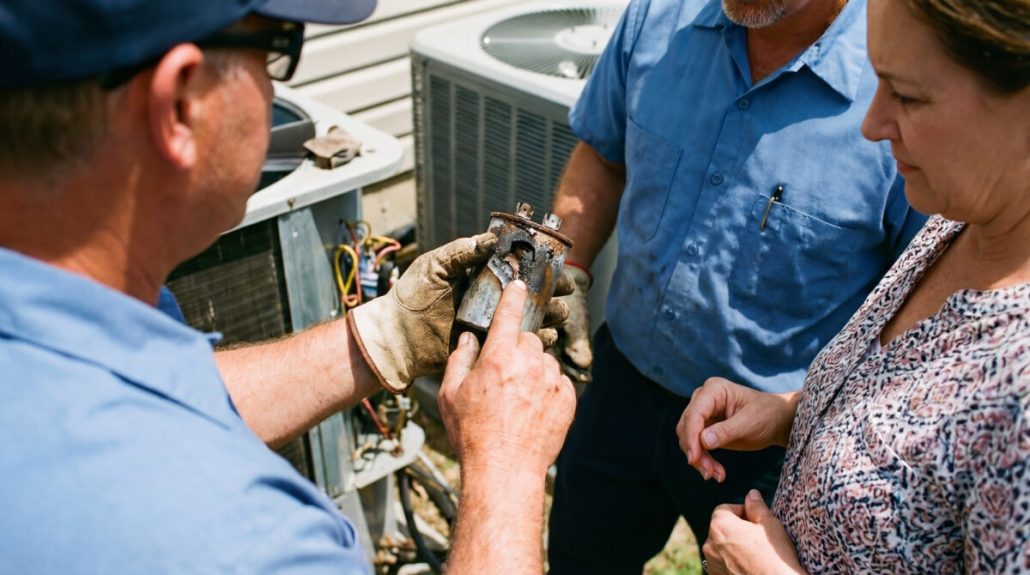
- Rust, corrosion or water staining on or around the furnace and outdoor air conditioning unit
- Frayed wiring, excessive dirt or debris, or scorch marks near the burners
- Uneven temperatures from room to room, which can point to airflow or ductwork problems
- Unusual noises on start-up: grinding, squealing or heavy vibration instead of a steady hum
- Musty or burning smells when the system runs
- No service records at all, since a missing maintenance history usually means years of deferred care
Any one of these on its own may be minor. Several together point to a system that hasn’t been looked after, and one that will likely cost you sooner than you’d like.
Know what a standard inspection might miss
A general home inspection is valuable, but it has limits when it comes to a full HVAC review. A typical inspector turns the system on, confirms it produces hot or cold air, notes the age and visible condition, and moves on. That process can miss worn internal components, low refrigerant, airflow issues or a cracked heat exchanger. These problems don’t show up in a five-minute check, and they are expensive to fix.
If the system is older, the inspection raises concerns, or the purchase is already a stretch on your budget, bring in a licensed HVAC professional for a dedicated evaluation. They can measure performance, check refrigerant and give you a realistic estimate of remaining life and replacement cost, turning a vague worry into a real number you can plan around.
One detail worth knowing: air conditioners manufactured before 2010 may use a refrigerant that has since been phased out, which can make repairs on those older units surprisingly costly.
Turn what you find into negotiating power
Here’s the part many buyers miss. A flagged furnace or air conditioning system isn’t only a warning; it’s leverage. If an inspection reveals an aging or ailing system, you have options. You can request a price reduction, ask for a credit or adjustment on closing toward replacement, or ask the seller to replace the unit before closing. Many buyers prefer a credit, because it puts cash directly toward a new system without reopening the whole negotiation.
The key is to act before your home inspection condition expires. Line up a contractor’s estimate early so you have documentation in hand before the deadline passes.
Buy with your eyes open
An older furnace or air conditioner shouldn’t send you running from an otherwise great home. Plenty of aging systems have years of life left. It should simply be a line item you understand before you sign, not a surprise you discover on the first cold night after moving in. A little attention to the mechanical heart of the home turns one of the biggest potential expenses of homeownership into something you can see coming, plan for and negotiate around.